
Mist Collection on Saint Helena
Photo 1: Hutts Gate mist collector
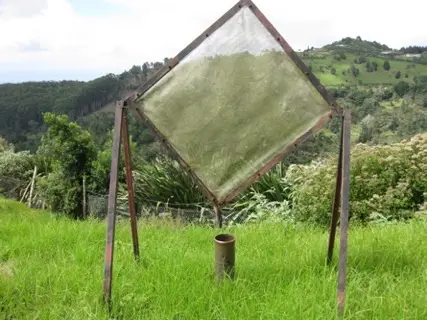
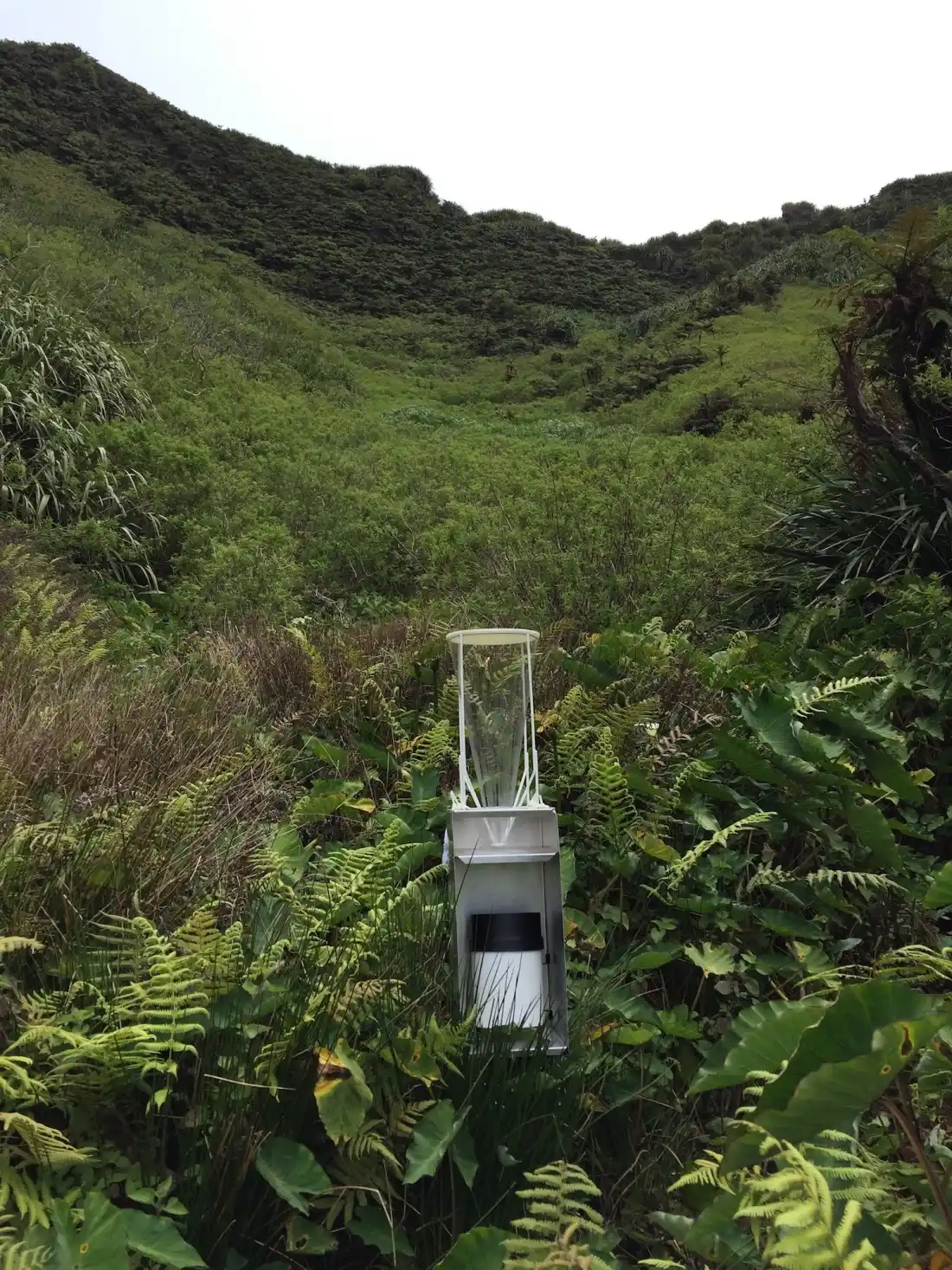
Photo 2: DPLUS051 project mist collector
The amount of water captured from fogs or mists by vegetation and artificial collectors depend on a number of factors which can include:
- Wetness of the mist;
- Speed at which the mist is moving (related to the measured wind speed);
- Physical nature of the obstruction (vegetation or fog collectors); and
- The land area of vegetation and surface ware of collectors which contribute to capturing of mist water (Gunston & Rosier, 2002).
The first documented reference made of mist capture/rainfall harvesting on St Helena was by I.K. Mathieson in 1990 in an End of Tour Report (Mathieson, 1990). The Institute of Hydrology completed a hydrological catchment consultancy for St Helena in 1997 to design a water balance model, quantify cloud water contribution to water balances and recommend land use and vegetation to improve water resource management (Gunston & Rosier, 1997). The report referenced two fog catchers that were installed at Taylors/Grapevine Gut (just below Cuckolds Point) and at Hutts Gate.
Mathieson (1992) described the mist collector that remains at Hutts Gate being installed in 1989 and comprising a rectangle of metal gauze (83.5cm x 91.7cm) placed in a frame of angle iron. The square was placed in a diamond shape on legs over a normal 125mm diameter rain gauge and oriented to face the prevailing wind (Gunston & Rosier, 2002). The mist collector is still located at Hutts Gate Water Treatment Works (see Photo 1).
For the purposes of the DPLUS051 project mist collection, a hybrid Juvik-type wire harp collector provided by the Centre for Ecology and Hydrology (CEH) was used. The CEH mist collector design follows the principal of a Juvik-type mist collector, which includes an integrated cap to prevent vertical rain from entering the gauge. The mist collector is cylindrical with a cone shaped bottom section and is 38cm tall and 21cm wide at the top, tapering to a cone which starts 30cm from the top of the collector and tapers to a point 3.5cm in diameter at the bottom (see Photo 2).
The mist collector provides a 3,566cm2 surface area for mist collection covered with 187 strands of 0.8mm diameter fishing wire in 47.5cm lengths (89m of fishing line). Mist collects on the fishing wire and under gravity, collects in a Hobo RG3 tipping bucket rain gauge data logger located below the mist collector.
The design does not prevent horizontal rain being included in the measured mist, however the cap prevents vertical rain from entering the rain gauge. The mist collector was oriented with the open side of the rain gauge box facing away from the prevailing wind direction.
Key considerations when using wire harp type mist collectors are the potential for high wind speeds to blow water droplets off wires due to wind drag and vibration of the strands. The interception of horizontal rain alongside fog can also provide misleading results. Lower wind speeds are also known to improve the collection efficiency of a wire harp mist collector.
